

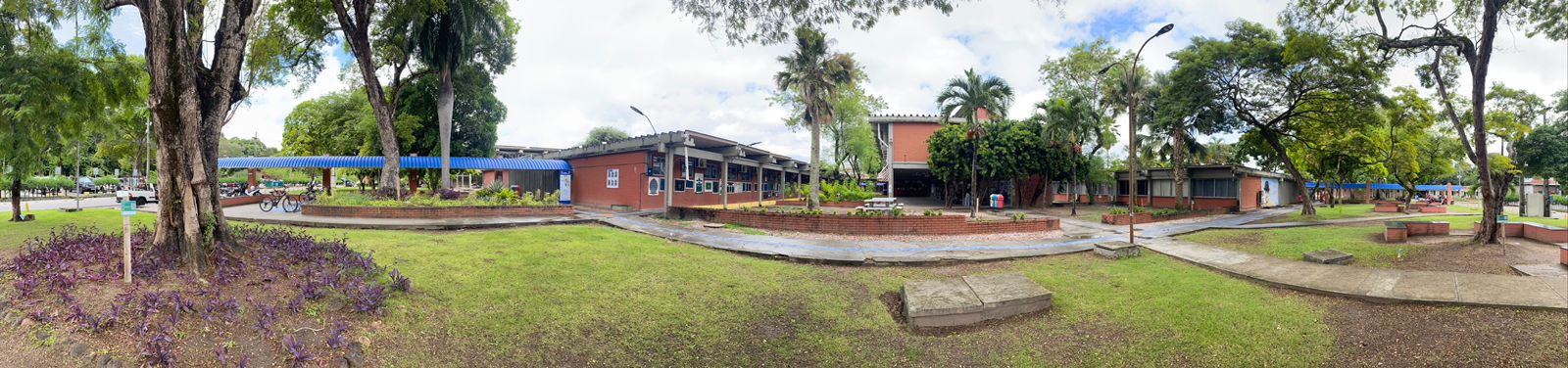
The history of the graduate program in Social Psychology in Brazil begins in 1975 with the establishment of the Master’s Program in Psychology at UFPB. This Master’s Program was structured into three areas of concentration: Social Psychology; Developmental and Learning Psychology; Mental Health Psychology. As the years went by, Social Psychology became the central focus of graduate studies and has since been a national reference in the field, standing out for integrating several professors trained abroad.
The quality of research and the training of highly qualified personnel was recognized in 1990 with the maximum possible score for its category in the CAPES evaluation. Years later, in 2003, UFPB, together with the Federal University of Rio Grande do Norte (UFRN), proposed the creation of a doctoral program called the Integrated Postgraduate Program in Social Psychology.
The success of the partnership established between UFPB and UFRN, the maturity of both institutions, and the expansion of their teaching staff led to the separation of the Integrated Program. In 2012, the part of the program based in João Pessoa generated the Postgraduate Program in Social Psychology (PPGPS), where the tradition in the field of Social Psychology was already strongly consolidated, allowing to train masters and doctors in Social Psychology.
The quality of the research conducted at PPGPS and the training of highly qualified personnel are widely recognized nationally and internationally. This recognition is reflected in the fact that the PPGPS receives the highest score attributed by CAPES to a postgraduate program in Social Psychology.
Social Development Psychology
This research line is dedicated to the study of psychosocial factors associated with all phases of human development.
It analyzes these factors in the context of childhood and adolescence at situations of risk and social vulnerability, in the realm of socio-moral development and in the most diverse modalities of social interaction.
Social Psychology of Health and Work
This research line is dedicated to the study of the psychosocial processes of the health-disease relationship, as well as to the investigation of the various modalities of subjectivity production in the context of work.
It analyzes the socio-neurological mechanisms underlying mental health, the role of the social context in vulnerability and the promotion of collective health, as well as the subjective factors associated with health in the context of work.
Social Psychology of Values and Social Inequalities
This research line is dedicated to the study of normative and socio-political factors that motivate social attitudes and behaviors.
It analyzes the normative bases of social behavior and the group and intergroup processes underlying the legitimation of various forms of manifestation of social inequalities in contemporary societies.
More information at: https://www.cchla.ufpb.br/cccs
Translation: Projeto InELC-Plantão de Tradução
Última atualização: quarta-feira, 28 de maio de 2025